True Air NJ Blog · September 2026
Your Basement Flooded Sunday. Before You Touch That Furnace, Read This.
Short answer: if floodwater touched your furnace, boiler, or water heater — even an inch — keep the power and gas off and get a licensed HVAC tech out before restarting anything. Water wrecks heating equipment from the inside, in ways you can't see.
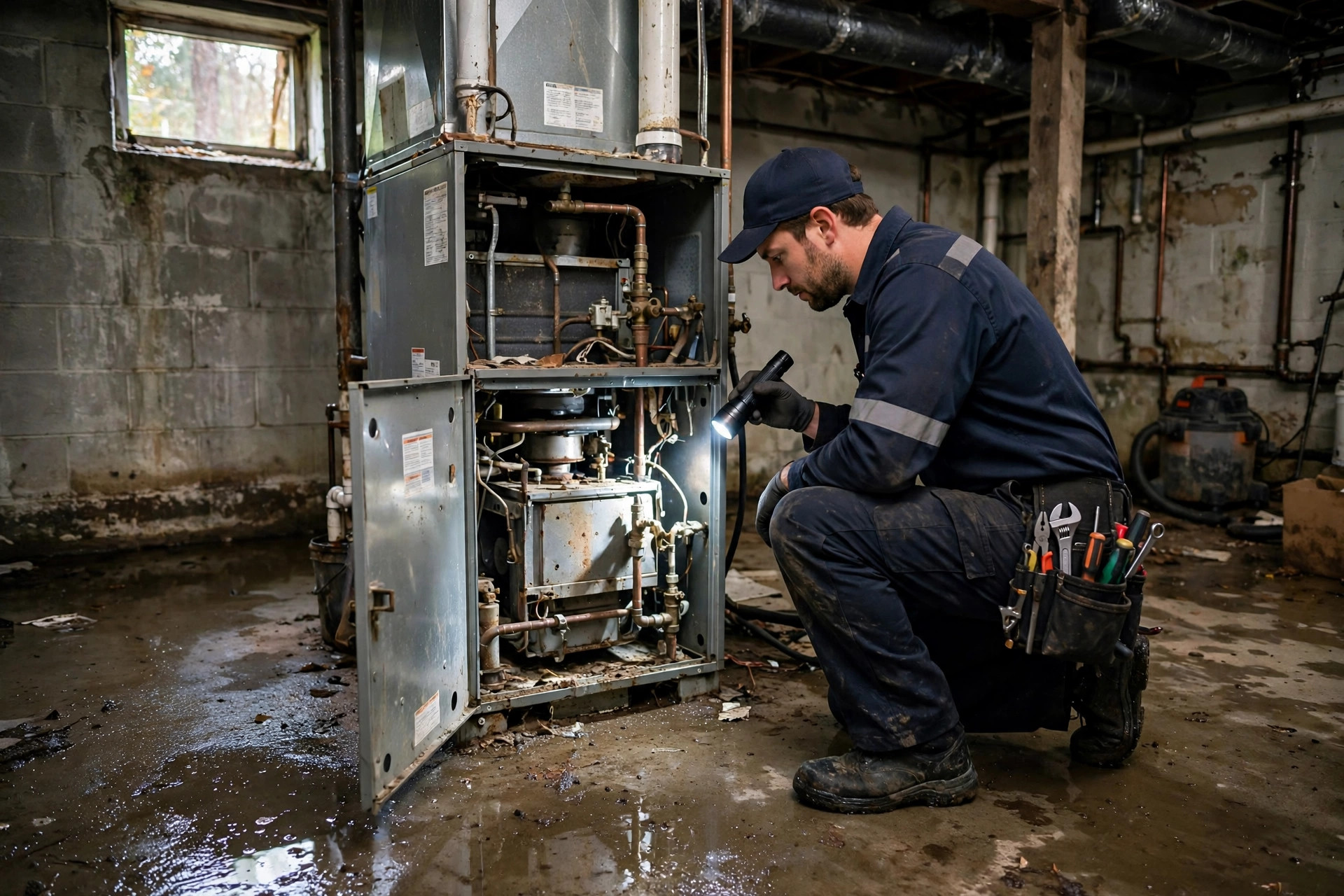
Your basement took on water on Sunday. You spent the last few days hauling out soggy boxes and running a wet vac. Now you're standing in front of the furnace, hand on the switch, thinking about turning it back on.
Stop. Don't touch it yet.
Water and heating equipment don't mix — not even after the basement looks dry. Here's what every North Jersey homeowner needs to know before restarting a furnace, boiler, or water heater that got wet.
Why you can't just flip it back on
A flooded furnace looks the same as it did last week. It isn't.
Inside that metal cabinet are gas valves, electronic controls, relays, igniters, and circuit boards. Floodwater — which in Sunday's storm was carrying road runoff, sewage, and silt — corrodes those parts from the inside. The corrosion can start invisible: a valve that opens fine today can stick open or fail closed next month. The industry group AHRI recommends replacing flood-damaged heating and cooling equipment entirely rather than just repairing it, because damage to controls, burners, venting, and insulation often can't be seen or fully cleaned.
And there's a more immediate danger. If your furnace or boiler has a gas line and the burners were hot when the water hit, internal parts can crack. A cracked heat exchanger or a damaged gas valve can mean a gas leak or carbon monoxide getting into your home. New Jersey's own Department of Labor issued a safety alert on exactly this: any heating system or boiler exposed to high water must get a complete professional evaluation before use — operating it without one risks fire, property damage, and serious injury.
So if water reached your furnace, boiler, or air handler at all — even an inch — the correct move is: keep the power and gas off, and get a licensed HVAC tech out to look at it.
Book Your Post-Flood Inspection
Flooded furnace, boiler, or water heater? Get a full professional evaluation before you restart anything. Free estimates across North Jersey.
(973) 653-8456Tap to call nowWater heaters: replace, don't patch
Here's the rule the pros follow, and you should too: a flooded water heater gets replaced. Period. Gas, oil, or electric — doesn't matter. Floodwater corrodes the internal components, compromises the insulation, and the pilot and burner controls are no longer trustworthy. Manufacturers and AHRI both say replace, not repair.
If your water heater is older than about 8 to 10 years, Sunday's flood may have just answered the "should I replace it now?" question for you. A new, more efficient unit will cost less to run every month for the next decade — the replacement pays for part of itself.
Your ducts got wet too
Even if the water never touched the furnace itself, if it got into your ductwork, you've got a problem brewing. Ducts that stay damp become mold factories, and every time the system runs, it blows that air through your whole house. Flooded ducts should be cleaned and disinfected by a professional before the heating season starts — and some sections may need to be replaced outright. Here's our honest guide on duct cleaning — though after a flood, it's not optional, it's a health issue.
The seasonal clock is ticking
Here's the part nobody's saying out loud: heating season is weeks away. North Jersey's first cold snap could be here by mid-October. Every other homeowner in Paterson, Clifton, Wayne, Passaic, and Hackensack is about to call for a furnace tune-up — and the ones who need post-flood inspections and replacements are about to find out there's a waitlist.
Get your system evaluated now, before the first 45-degree night, before you're competing with everyone else on the phone queue.
What a post-flood HVAC inspection covers
When a tech comes out, here's what should happen:
- Full visual and electrical check of the furnace, boiler, and air handler — controls, relays, wiring, gas valves
- Heat exchanger inspection — looking for cracks or damage from thermal shock
- Chimney and flue check — floodwater undermines chimneys and venting, which affects safe exhaust
- Duct assessment — deciding what can be cleaned and what must be replaced
- Water heater evaluation — almost always a replacement recommendation if it got wet
- Carbon monoxide testing once everything is confirmed safe to run
Don't take "looks fine" for an answer. After a flood, the dangerous damage is the kind you can't see.
Don't Just Turn It Back On
Licensed & insured pros, free estimates, same-day service across North Jersey. We'll tell you straight what's safe, what needs cleaning, and what needs to be replaced.
(973) 653-8456Tap to call nowIf it wasn't flooded, you're still not done
Maybe your basement stayed dry on Sunday. Good — but the storm still taught you something. Your heating system is about to start its hardest season of the year on the back of a humid, flooding-heavy summer. A fall tune-up now — cleaning the burners, checking the heat exchanger, testing the ignition, replacing the filter — is what keeps a November cold snap from turning into an emergency no-heat call at 11 p.m. Here's the full fall furnace checklist.
The bottom line
Sunday's flood was the kind of event that finds every weak point in your house — including the ones hiding inside your furnace cabinet. The most dangerous thing you can do right now is the thing that feels most normal: just turning everything back on.
Post-Flood HVAC FAQs
Can I restart my furnace after my basement flooded?
No — keep the power and gas off and call a licensed HVAC technician first. New Jersey's Department of Labor safety guidance is explicit: any heating system exposed to floodwater needs a complete professional evaluation before use. Floodwater corrodes gas valves, controls, and circuit boards from the inside, and restarting a damaged furnace risks gas leaks, carbon monoxide, and fire.
Does a flooded water heater need to be replaced?
Yes — flooded water heaters get replaced, not repaired. Gas, oil, or electric, it doesn't matter. Floodwater corrodes internal components, compromises the insulation, and leaves the pilot and burner controls untrustworthy. Manufacturers and the industry institute AHRI both recommend replacement over repair for flood-damaged equipment.
How do I know if floodwater reached my HVAC equipment?
Look for a water line or staining on the furnace cabinet, rust on internal parts, damp or clumped insulation, and mineral residue on the floor around the unit. If water got into your ductwork, you may smell mustiness when the system runs. When in doubt, have a technician check — the dangerous damage is often invisible.
What does a post-flood HVAC inspection include?
A full visual and electrical check of the furnace, boiler, and air handler (controls, relays, wiring, gas valves), heat exchanger inspection for cracks, chimney and flue check, duct assessment, water heater evaluation, and carbon monoxide testing once everything is confirmed safe to run.
How soon should I book a post-flood inspection before heating season?
Now. North Jersey's first real cold snap can arrive by mid-October, and every homeowner whose basement flooded is about to call for inspections and tune-ups. Booking early means a faster appointment, standard pricing, and time to order a replacement system if the inspection says you need one — before you're competing with everyone else on the phone queue.